
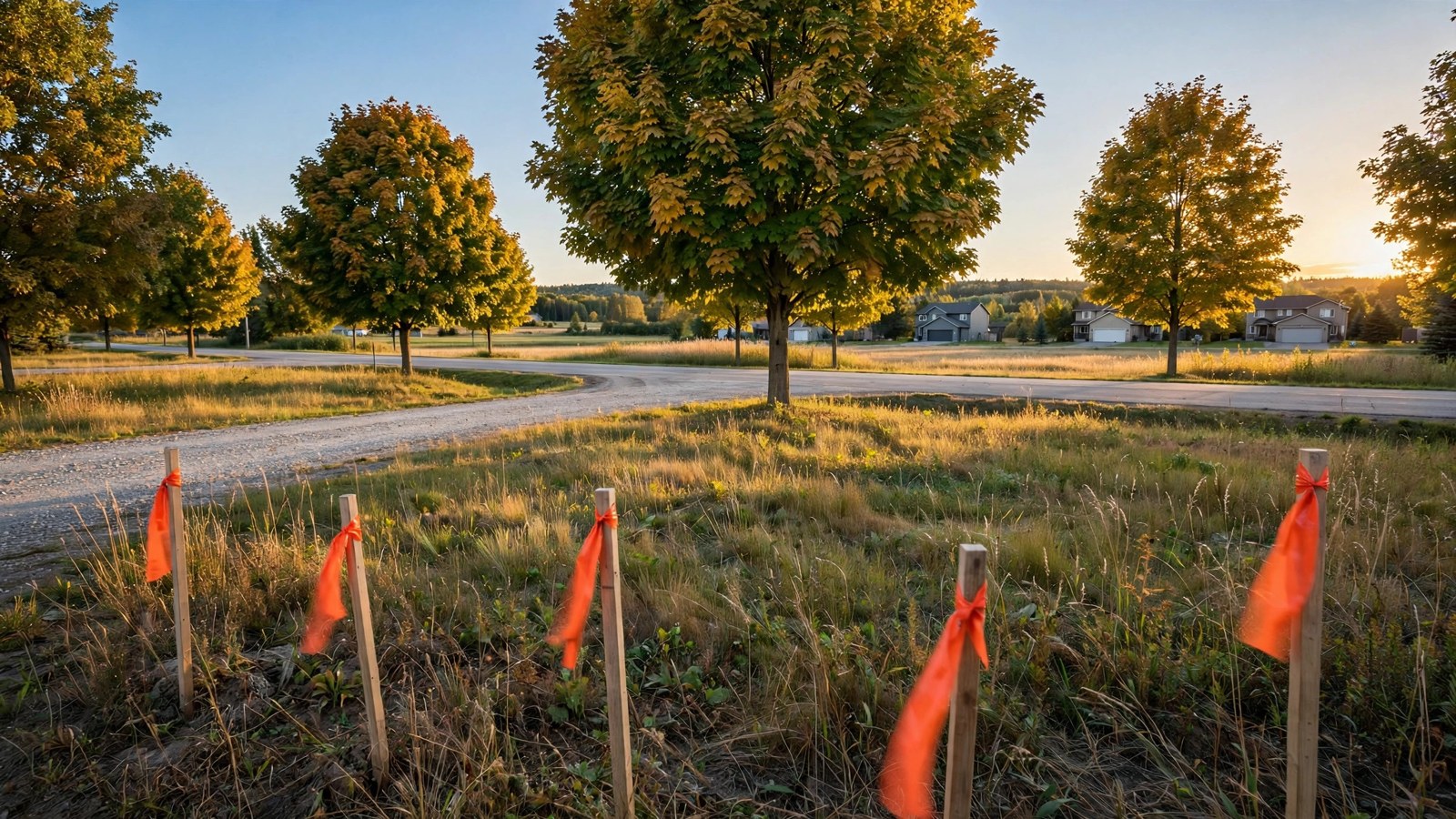
Why More Canadians Are Looking at Empty Lots
Buying a piece of vacant land feels like the simplest transaction in real estate. There is no roof to inspect, no furnace to age out, no tenants, and no bidding war over granite countertops. Yet experienced buyers will tell you that land is actually one of the most complicated purchases you can make in Canada — because almost everything that makes a property valuable, financeable, and buildable has to be verified from scratch. The zoning may not allow the home you imagine. The lot may have no legal road access. The "cheap" rural parcel may need $100,000 of servicing before a foundation can be poured. And the bank that happily offered you 5% down on a house may ask for 35–50% down on the land underneath it.
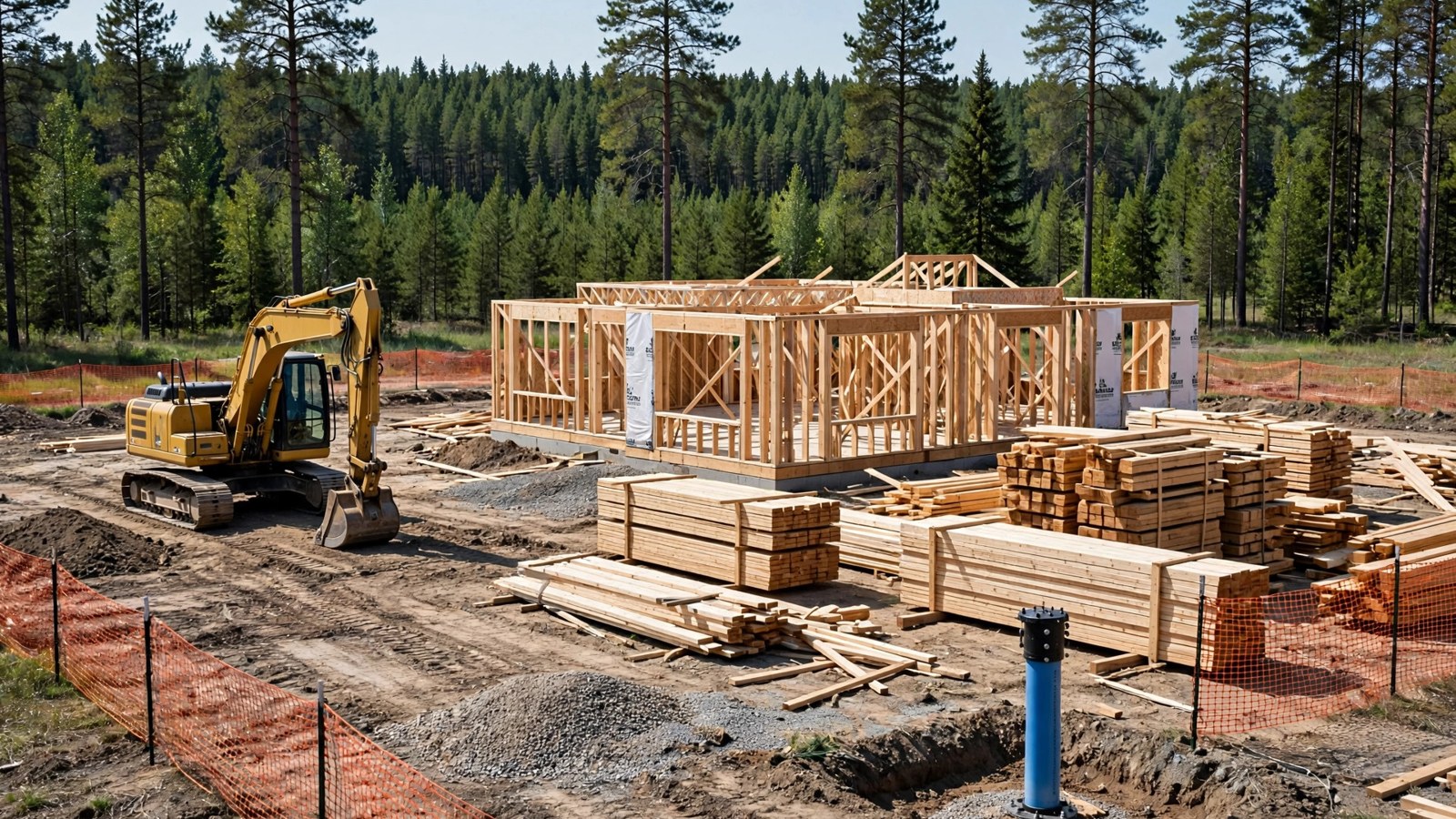
The interest is understandable. Canada Mortgage and Housing Corporation (CMHC), in its Fall 2026 Housing Supply Report, estimates the country needs between 417,000 and 469,000 housing starts per year over the next decade to restore pre-pandemic affordability by 2036 — against a business-as-usual pace of roughly 231,000 starts a year. That gap of 187,000 to 238,000 homes a year is, at its root, a land story: homes can only be built where serviced, zoned, buildable lots exist. It is also why governments are pushing factory-built housing and gentle density, themes we explored in our guide to factory-built and modular homes in Canada. For individual buyers, a vacant lot can be a path to a custom home, a future cottage, a long-term hold, or a small development. This guide explains how land financing really works, the due diligence that separates a good lot from an expensive mistake, what servicing and building actually cost in 2026, and the tax traps to check before you sign.
Vacant land in Canada, 2026 — the key numbers
- 20–35% — typical down payment on a serviced building lot
- 35–50%+ — typical down payment on raw, unserviced land
- $22,000–$38,000 — typical cost of a rural septic system (Ontario, 2026)
- $9,000–$24,000 — typical cost of drilling a well (Ontario, 2026)
- 417,000–469,000 — homes per year CMHC says Canada must start to restore pre-pandemic affordability by 2036
- 231,000 — housing starts per year at the current projected pace
The Four Kinds of "Vacant Land" — and Why Lenders Care
Not all empty land is equal, and the first thing a lender does is sort your parcel into a category. The category drives the down payment, the interest rate, and often whether you get an approval at all.
Serviced building lots
A serviced lot sits in a registered plan of subdivision or an established neighbourhood, with municipal water, sewer, roads, and utilities available at the lot line. It is the closest thing to a conventional purchase: lenders can compare it against recent lot sales, a building permit is realistically obtainable, and construction can start on a normal timeline. Canadian land-financing guides such as WOWA's put typical down payments for serviced lots at roughly 20–35%, with loan-to-value ratios commonly in the 50–65% range depending on the lender and the borrower.
Raw or unserviced land
Raw land has some combination of no municipal services, no drilled well, no septic approval, long utility runs, and sometimes no registered road frontage. It produces no income, can sit unsold for years, and is hard for a lender to value — so lenders protect themselves. Expect down payments of 35–50% or more, higher interest rates, shorter terms (often one to three years, frequently interest-only), and in many cases a private or alternative lender rather than a chartered bank. CMHC mortgage default insurance, which lets homebuyers purchase with as little as 5% down, generally does not apply to bare land.
Development-ready land
Land with zoning approvals, a registered plan, servicing agreements, or permits in hand sits between the two extremes. Because much of the entitlement risk has already been retired, lenders will typically advance a higher share — loan-to-value ratios of roughly 60–75% are cited in land-financing guides — though the loans are still usually commercial in structure: short terms, personal guarantees, and interest reserves held back from the advance.
Agricultural land
Farmland has its own financing ecosystem, including Farm Credit Canada (FCC) and provincial agricultural programs, with longer amortizations than other land loans. The catch is use: agricultural financing assumes agricultural use, and converting farmland to residential or commercial development changes both the financing and the planning analysis entirely.
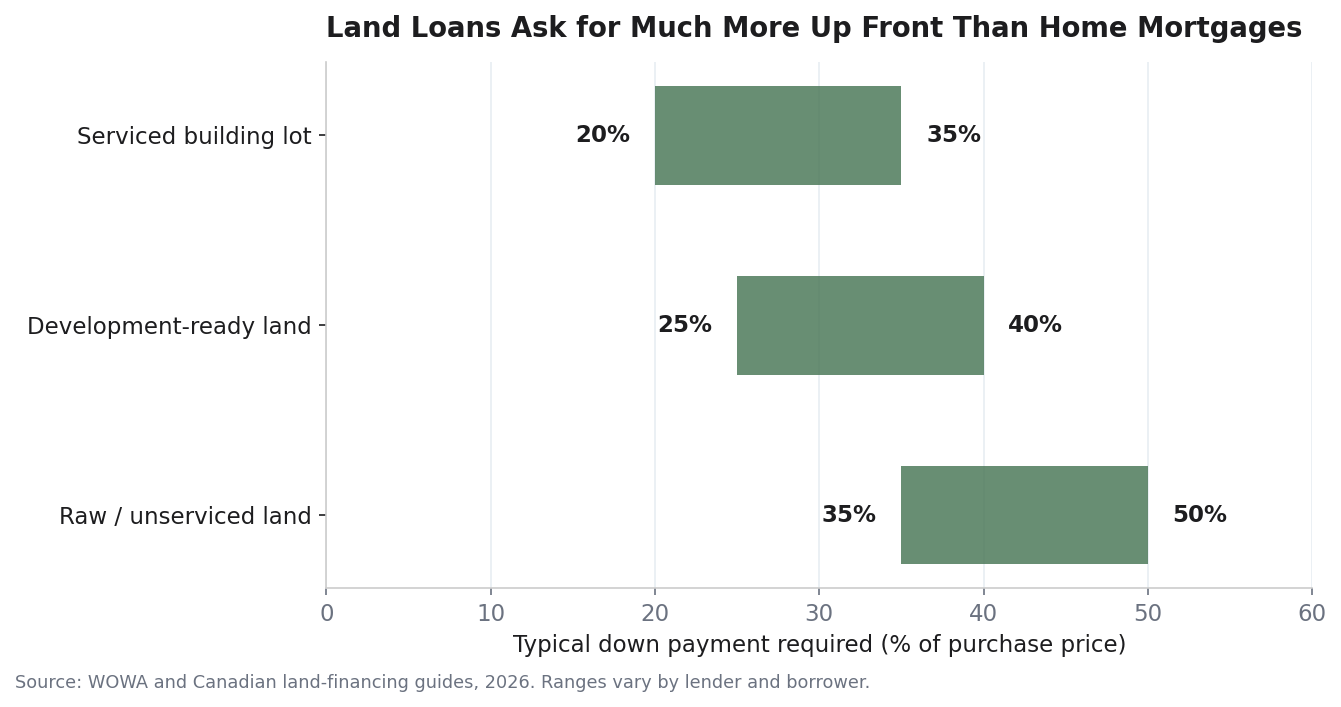
Typical down payment ranges by land type. Source: WOWA and Canadian land-financing guides, 2026.
How Land Financing Actually Works
If you are used to residential mortgages, land loans will feel unfamiliar in five ways.
- Bigger down payments. As the chart above shows, 20–50% is the normal band, versus 5–20% for an insured or conventional home purchase. Our guide to down payment rules in Canada explains why houses are treated so differently.
- Higher rates and shorter terms. Land loans are priced as riskier credit. Terms of one to five years are common, payments are often interest-only, and some lenders hold back six to twelve months of interest from the advance as a reserve.
- No mortgage insurance safety net. Because CMHC insurance is generally unavailable on bare land, the lender carries the full risk — another reason leverage is lower.
- The exit plan matters. Lenders want to know what happens at the end of the term: you build (and roll into a construction or completed-home mortgage), you sell, or you refinance. A credible, documented plan measurably improves approval odds.
- Construction draws, not one advance. If you plan to build right away, a construction mortgage may cover part of the land cost and release the rest in stages as work is inspected. That structure rewards buyers who arrive with permits, plans, and a signed builder contract.
Alternatives buyers commonly use include a home equity line of credit (HELOC) on an existing home, credit-union land loans (credit unions are often more flexible on rural parcels in their own communities), seller financing — a vendor take-back, where the seller carries part of the price — and, for farmland, FCC or a federally guaranteed agricultural loan. Each has a different cost and risk profile, and the cheapest headline rate is not always the cheapest total path once fees, reserves, and renewal risk are counted.
Due Diligence: The Six Checks That Decide Whether a Lot Is Buildable
Most land disasters share a pattern: the buyer fell in love with the view and verified nothing. Ontario legal guides to buying vacant land, including Treadstone Law's practice guide, put zoning first for a reason — it should be checked before you spend a dollar on surveys or studies. Here is the sequence experienced land buyers follow.
The six-step land due-diligence sequence
- Zoning and official plan — confirm the permitted use, setbacks, lot coverage, height, and minimum frontage with the municipal planning department, in writing.
- Legal access — confirm registered frontage on a public, year-round maintained road, or a registered right-of-way. Landlocked or informally accessed parcels are hard to finance, insure, and resell.
- Servicing — price municipal hookups, or, for rural lots, a septic perc test and well viability before you commit.
- Environmental and conservation constraints — screen for floodplain, wetlands, conservation-authority regulation, and prior uses that warrant a Phase I environmental assessment.
- Survey and title — obtain a current survey, walk the lot lines, and review title for easements, encroachments, and rights-of-way that shrink the buildable area.
- Total project pricing — add land, servicing, permits, development charges, and build cost into one budget, with a contingency, before the offer firms up.
Zoning: two layers, both must say yes
Canadian municipalities control land use in two layers. The official plan sets the high-level designation — residential, agricultural, rural, commercial — while the zoning by-law sets the enforceable rules: permitted uses, setbacks from lot lines and water, lot coverage, and minimum lot area and frontage. Both must permit what you want to build. If they do not, you are looking at a zoning amendment or minor variance — processes that take months, cost money, and are never guaranteed. Never buy land banking on an approval you do not have. Many municipalities offer a pre-application consultation with planning staff; for the price of an afternoon, it is the cheapest risk reduction in the entire purchase. If your plans involve adding units, our explainer on zoning reform and the missing middle shows how quickly these rules are changing in Canadian cities.
Access, easements, and the buildable envelope
A one-acre lot sounds spacious — 43,560 square feet. But apply the front, rear, and side setbacks, subtract any utility easements and rights-of-way, add a septic bed with its required clearances, and respect any wetland or floodplain buffer, and the actual building envelope can shrink dramatically. This is why a current survey matters: it converts a listing's acreage into the rectangle you can actually build on. Confirm, too, who maintains the road. A private or seasonal road can mean annual maintenance fees, winter access problems, and lender reluctance.
Environmental and conservation screens
Lots near watercourses, wetlands, floodplains, or steep slopes may sit inside a conservation authority's regulated area (in Ontario) or an equivalent provincial regime elsewhere, requiring permits before construction and sometimes an environmental impact study. Land with a history of industrial, commercial, or intensive farm use may warrant a Phase I environmental site assessment — which lenders frequently require anyway on larger parcels. Discovering a regulated wetland after closing does not just delay a build; it can permanently remove the only practical building site on the lot.
What Servicing Really Costs in 2026
The single most common land-buying mistake is budgeting for the lot and the house, and treating everything in between as a rounding error. On a serviced urban infill lot, the in-between is modest: connection fees, permits, and development charges. On an unserviced rural parcel, it is a second purchase hiding inside the first.
Ontario custom-home builders' 2026 cost guides put a conventional septic system at roughly $22,000–$38,000 installed (engineered or raised-bed systems on difficult soils cost more), a drilled well at roughly $9,000–$24,000 depending on depth, and site work — clearing, excavation, grading, and a proper driveway with culverts — anywhere from $20,000 to $100,000+ depending on trees, rock, slope, and driveway length. Bringing hydro down a long rural lane can add tens of thousands more; several guides cite figures up to roughly $50,000–$60,000 for remote runs. Permits and development charges are their own five-figure line in many municipalities. Add these up and $50,000–$150,000 of site cost on a rural build is normal, not a worst case — a point we also made in our guide to buying a rural property in Canada, where wells, septic systems, and zoning get a full treatment.
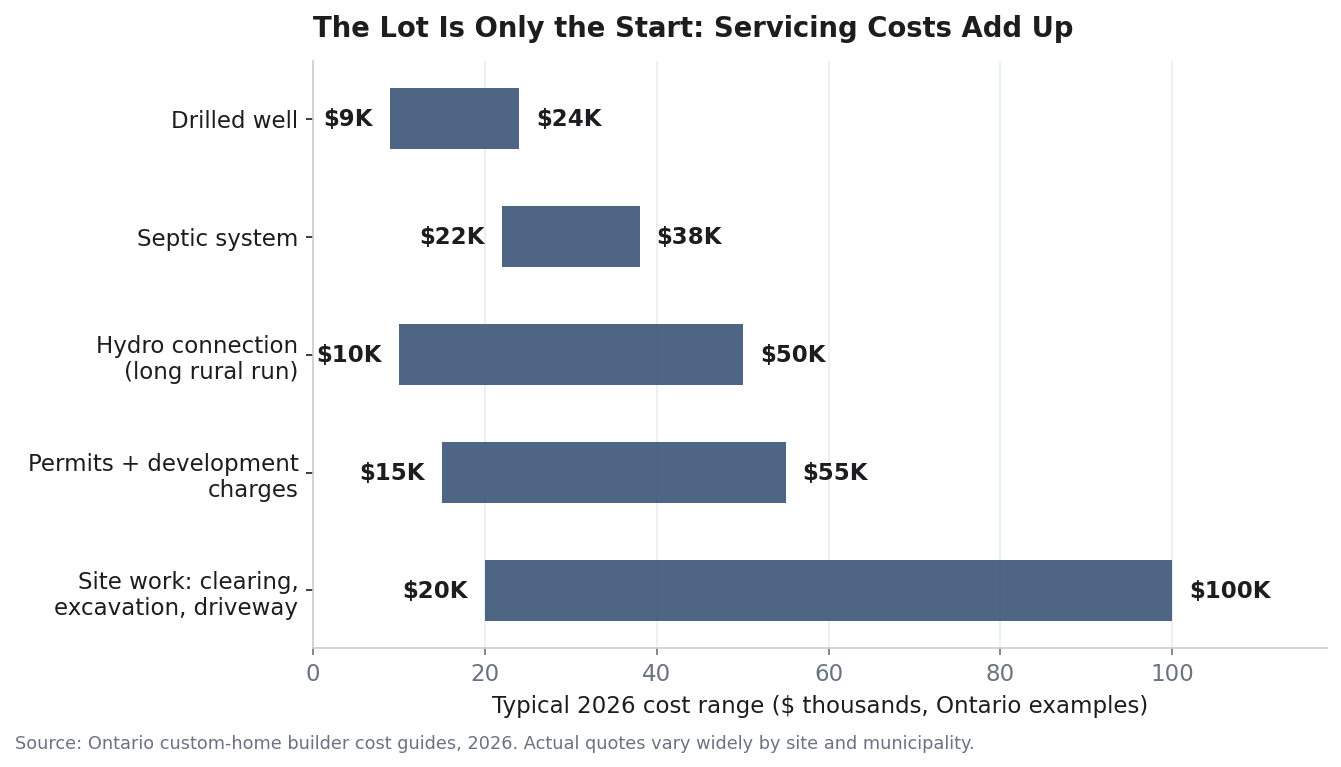
Typical servicing cost ranges on an unserviced parcel. Source: Ontario custom-home builder cost guides, 2026.
Then comes the house itself
Construction is the biggest line of all. Ontario builders quoting 2026 projects commonly cite roughly $340–$575 per square foot for custom construction, with simpler rural builds sometimes landing near $300–$350 and GTA projects at or above the top of the range. A 2,000-square-foot home at those rates is roughly $680,000 to $1.15 million for the structure alone — before land, servicing, design, permits, and financing during construction. Soft costs (drawings, engineering, survey, legal, appraisals, draw inspections) typically add a further 10–15%, and prudent builders hold a contingency of about 10%, rising to 15% on lots with unknowns such as rock or a high water table. Two offsets deserve a check before you finalize a budget: the enhanced GST/HST new housing rebate — worth up to $130,000 on qualifying new and substantially renovated homes under the rules now in effect — and, for serviced lots in supply-strapped cities, the alternative of buying a factory-built home, which can compress both timelines and on-site labour costs.
Taxes and Fees Buyers Miss
- GST/HST on the purchase itself. Sales of vacant land by individuals are often exempt, but land sold by a builder, developer, or corporation — including most new subdivision lots — is generally taxable, and personal-use and severance rules create exceptions in both directions. A 13% HST surprise in Ontario (or 5% GST plus provincial tax elsewhere) on a $400,000 lot is a $52,000 mistake. Confirm the tax status in the agreement, in writing, with your lawyer.
- Land transfer tax. Most provinces levy it on land just as on houses, calculated on the purchase price; a few (Alberta, Saskatchewan) charge only modest registration fees instead. Our cross-Canada land transfer tax guide has the provincial rates and first-time buyer rebates.
- Carrying costs. Vacant land still attracts property tax every year, plus liability insurance, and any road-association or maintenance fees. On a multi-year hold, these quietly compound.
- Vacant land and speculation taxes. Some municipalities and provinces tax vacant or underused land specifically, and rules are evolving as governments push owners to build. Check the local regime before assuming a long, cheap hold.
- Selling later. Land held personally and sold at a gain is generally a capital asset; land bought with the intent to develop or resell quickly can be treated as business inventory, with the gain fully taxable — and Canada's anti-flipping rule can deem a property sold within 12 months to be business income in any case. The distinction is fact-specific; get advice before, not after.
Building on Your Lot: From Purchase to Permit
Once you own a buildable, serviced (or serviceable) lot, the path to a house runs through a predictable sequence. First, design: a permit-ready set of drawings, with structural engineering, typically budgeted as a percentage of construction cost. Second, approvals: the building permit itself, plus any conservation, septic, entrance (driveway) permits, and development-charge payments the municipality requires. Third, financing conversion: construction lenders release funds in inspected draws — foundation, lock-up, drywall, completion — so your builder's schedule and your lender's draw schedule must match. Fourth, warranty: new homes built by a licensed builder carry provincial warranty coverage (Tarion in Ontario, the 2-5-10 warranty in BC, and equivalents elsewhere), while owner-built homes follow different rules that can affect both financing and resale. If a full custom build is more than you want to manage, a laneway, garden, or secondary suite on an existing lot follows a related but smaller-scale path — see our guide to secondary suites, laneway houses, and garden suites for those rules and costs.
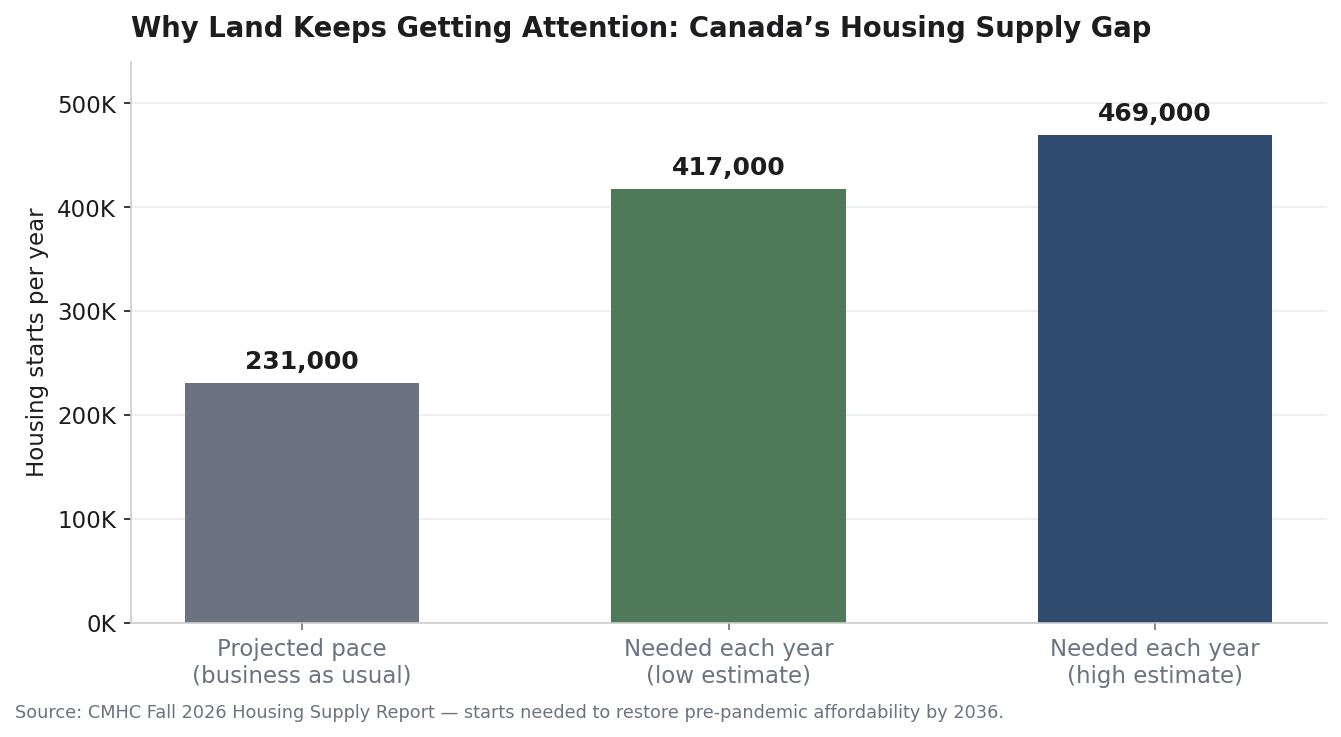
Canada's housing supply gap. Source: CMHC Fall 2026 Housing Supply Report.
Common Mistakes — and How to Avoid Them
- Skipping the planning department. A fifteen-minute call or a pre-consultation can kill a bad purchase before it starts. Listing remarks are not zoning confirmation.
- Assuming services are "nearby." Nearby is not a price. Get written quotes for the actual connection, well, and septic work.
- Waiving conditions to win the lot. Land is rarely so competitive that financing, zoning, and soil/percolation conditions should be waived. If a seller insists, price the risk — or walk.
- Budgeting lot + house, nothing between. Servicing, permits, development charges, soft costs, and contingency belong in the budget from day one.
- Ignoring the exit. Lenders ask about it, and so should you: build, hold, or resell each imply different parcels, financing, and tax treatment.
- Forgetting the tax status of the sale. Confirm GST/HST treatment in the agreement itself.
The Bottom Line
Vacant land can be a genuinely good purchase in 2026 — a route to a custom home in a market short of finished houses, a foothold in a growing community, or a long-term store of value in a country that CMHC says must nearly double its building pace to restore affordability. But land rewards verification and punishes assumptions more than any other kind of real estate. Confirm the zoning in writing, prove the access, price the servicing with real quotes, finance it with a down payment and an exit plan that match its category, and budget the whole project — lot, services, permits, house, and contingency — before your offer goes firm. Do that work, and the empty lot stops being a gamble and becomes what it should be: the first, solid step toward the home you actually want to build.
Sources
- CMHC, Fall 2026 Housing Supply Report — housing starts needed (417,000–469,000 per year) versus business-as-usual pace (~231,000) to restore pre-pandemic affordability by 2036.
- WOWA, Can You Get a Mortgage for Land in Canada? (updated September 2026) — down payment ranges by land type; construction and agricultural loan options.
- LendCity, Land Financing Canada: Raw & Serviced Loans (2026) — loan-to-value ranges for raw, serviced, development-ready, and agricultural land; Farm Credit Canada terms.
- Ontario custom-home builder cost guides, 2026 (Builders Ontario; Country Contracting; ICF Home) — septic, well, site work, hydro, permit/development-charge, and per-square-foot construction ranges.
- Treadstone Law, Buying Vacant Land to Build in Ontario: Legal Guide (2026) — zoning, official plan, and due-diligence sequence.
- RE/MAX Canada, Buying Vacant Land in Canada (2026) — access, survey, servicing, and environmental checks.
This article is general information for Canadian readers, not legal, tax, or mortgage advice. Land rules, taxes, and lending terms vary by province, municipality, and lender — confirm the specifics of any parcel with your lawyer, lender, and municipal planning department before you buy.

Comments
No comments yet. Be the first to share your thoughts.