
Why Rent Control Matters More in 2026 Than Ever
Canada's rental market has been through a strange decade. Rents in most major cities sit at or near record highs, vacancy rates spent years at historic lows, and then a burst of new rental construction finally started loosening conditions in some markets. For the roughly one-third of Canadian households who rent, the question of how much a landlord can raise the rent each year is not abstract - it decides whether they can stay in their home, their neighbourhood, and in some cases their city.
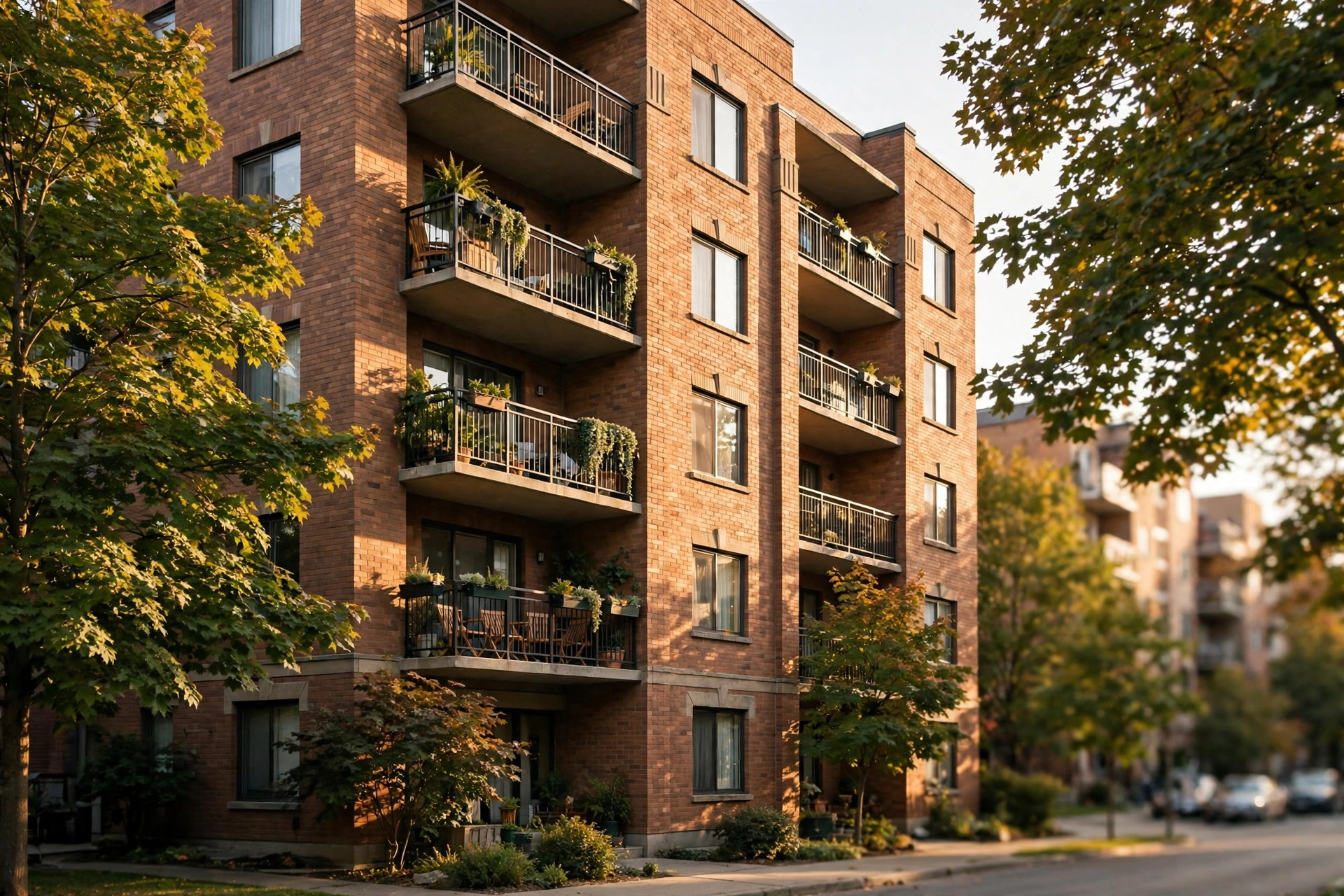
What makes Canada unusual is that there is no national rent control policy at all. Rent regulation is a provincial (and sometimes territorial) matter, and the three provinces where most renters live - Ontario, British Columbia, and Quebec - run three completely different systems. In 2026, all three happen to be operating near multi-year lows for allowable increases, while Quebec overhauled its calculation rules on January 1, 2026. Add Nova Scotia's extended 5% interim cap, and it is worth laying the whole picture out.
This post compares the rules as they stand in October 2026: the actual percentages, which units are covered, the notice and timing requirements, and the escape valves landlords can use. Figures are drawn from provincial governments, the Ontario Landlord and Tenant Board, BC's Residential Tenancy Branch, and Quebec's Tribunal administratif du logement (TAL), with sources listed at the end. Rules change; always verify against the official source before acting.
Related reading: Vacant Home Taxes in Canada: Toronto, Vancouver, and Ottawa Rules for 2026
The One Rule Shared Across Canada: The Turnover Reset
Before the differences, the single biggest similarity. In every Canadian province, rent control applies to existing tenancies - not to the rent a landlord asks when a unit turns over. When a tenant leaves, the landlord is generally free to set whatever rent the market will bear for the next tenant. This is called vacancy decontrol, and it is the engine behind the well-documented gap between what long-term tenants pay and what newcomers pay for identical units.
A Statistics Canada study published in 2025 found that average shelter costs for tenants with tenures under a year ran substantially higher than for tenants with tenures of five years or more - a gap that has widened over the past two decades, while the share of renters who had moved within the past year fell from 29.5% to 19.9%. Tenants stay put partly because they cannot afford to move.
Montreal offers the sharpest illustration. According to data cited by Quebec tenant groups from CMHC, rents in Montreal increased by an average of 17.2% when a unit changed hands in 2025 - while sitting tenants faced guideline-level increases. That turnover gap is the single most important thing any renter or investor in Canada should understand: the regulated number is what you get for staying; the market decides what you get for moving.
Ontario: 2.1% in 2026 - The Lowest Cap in Four Years
Ontario has the most structured rent control system in the country. Each year the provincial government sets a rent increase guideline - the maximum percentage by which a landlord can raise the rent on a covered tenancy without approval from the Landlord and Tenant Board (LTB). For 2026, the guideline is 2.1%.
That number matters for two reasons. First, it is the tightest cap in four years: the guideline was held at 2.5% for three consecutive years (2023, 2024, and 2025), which itself was the maximum allowed. Second, the 2.5% level was not the natural result of the formula - the guideline is calculated from the Ontario Consumer Price Index (the 12-month average from June to May) and is capped at a maximum of 2.5% regardless of how high inflation runs. The decline to 2.1% in 2026, and the already-announced 1.9% for 2027, reflects genuinely cooling inflation rather than a policy squeeze.
Who the cap actually covers
Here is the part most people get wrong. The guideline does not apply to every rental in Ontario. It applies only to most rental units first occupied for residential purposes on or before November 15, 2018. Units first occupied after that date are generally exempt from the guideline cap - a change introduced in 2018 that means newer buildings, new basement apartments, and recently converted condos can have their rent increased by more than the guideline each year.
The covered stock is still enormous: the province says the guideline protects around 1.4 million households. But a growing share of Ontario's rental supply - everything built in the last eight years - sits outside it. That two-tier market is now the defining feature of Ontario rent regulation, and it shows up clearly in turnover rents for newer buildings.
The mechanics: notice, timing, and above-guideline increases
- 90 days' written notice on the proper LTB form before any increase takes effect.
- No more than once every 12 months. Increases are neither automatic nor mandatory.
- Vacant units are exempt - a new tenant's rent is negotiated freely, then the guideline clock restarts on the new tenancy.
- Above-guideline increases (AGIs) require LTB approval, typically tied to extraordinary property tax increases or major capital work. AGI applications have surged in recent years - the Tribunal's 2023-24 annual report showed AGI applications up more than 50% between the last two fiscal years, and over 125% since 2020-21.
- Tenants must challenge improper increases within one year of the increased amount first being charged, or the increase can be deemed lawful.
Landlords and tenants can also agree to a rent increase above the guideline in exchange for capital work or a new or additional service, using Form N10 - capped at the guideline plus 3% (5.1% on the 2026 guideline), with the tenant able to cancel in writing within five days of signing.
What changed in September 2026
Ontario's Bill 60 received Royal Assent in 2025, and its Residential Tenancies Act amendments came into force on September 21, 2026 - tightening eviction processes (including shortened notice timelines for non-payment and a formal written test for persistent-late-payment applications). The 2026 guideline itself is unchanged by those amendments: 2.1% remains the ceiling for covered units, and qualifying post-2018 units remain exempt.
British Columbia: 2.3% in 2026, Tied to Inflation
British Columbia's system is simpler than Ontario's in one key respect: the cap applies to all residential tenancies governed by the Residential Tenancy Act, with no age-of-building exemption. A tenant in a 2023-built condo tower has the same protection as a tenant in a 1970s walk-up.
For 2026, the maximum allowable rent increase is 2.3% - down from 3.0% in 2025, and among the lowest rates in over two decades. The province now ties the cap directly to inflation: the figure is the 12-month average percentage change in the BC all-items Consumer Price Index ending in July of the year before the increase takes effect. This is the second consecutive year the cap has been set at inflation, and the province has already announced 2.2% for 2027, effective January 1, 2027.
The mechanics
- Three full months' written notice using the correct Notice of Rent Increase form - measured differently than Ontario's 90 days, a detail that trips up out-of-province operators.
- No more than once in a 12-month period.
- No increase before January 1, 2026 for 2026 increases; the province announces the cap each August to give landlords time to serve notice.
- Landlords may ask a tenant to accept more than the cap - but the tenant is free to refuse, and the increase cannot proceed without agreement.
- Manufactured home park tenancies get the same 2.3% plus a proportional amount for changes in local government levies and regulated utility fees.
BC's regime is generous to tenants by design: in 2024 the province capped increases at 3.5% while inflation ran at 5.6%, deliberately forcing landlords to absorb the difference. Before 2018, the formula was inflation plus 2%, which let rents compound well above the cost of living. Landlord groups, including LandlordBC, have argued that persistent below-cost caps discourage maintenance and new rental investment - a tension that defines BC's policy debate.
Quebec: No Hard Cap, But a Tribunal That Can Set Your Rent
Quebec's system is the most distinctive in Canada. There is no statutory maximum percentage for rent increases. Instead, the Tribunal administratif du logement (TAL) publishes annual indices that serve as reference points, and any contested increase is decided by the Tribunal using a statutory formula based on the building's actual costs.
The 2026 numbers
For 2026, the TAL set the base percentage used in the rent-fixing calculation at 3.1% for lease-modification notices given on or after January 1, 2026 (down from 4.5% in 2025). Simplified summaries of the TAL's 2026 indices put the reference increase at approximately 2.3% for heated buildings and 1.9% for unheated buildings. Note these are guidelines, not ceilings: a landlord can propose more, but the tenant can contest it, and the TAL's formula decides.
January 1, 2026 also brought a new regulatory framework, heavily criticized by tenant groups as a missed opportunity to strengthen control. The new rules keep the base rate (calculated on four years of inflation) as the central element, add 5% of renovation expenses to the allowable increase (up from roughly 3% since 2008), and allow property tax and insurance increases that exceed the base rate to be passed through. Tenant organizations note that most landlords settle below the indices in practice - but that CMHC data shows actual rent increases far exceeding the guidelines in parts of Montreal.
The process: notice, refusal, and rent fixation
- Notice of lease modification must be given 3 to 6 months before the renewal date for leases of 12 months or more (1 to 2 months for shorter leases; 10 days for week-to-week).
- The tenant has one month to refuse the increase in writing. Silence means acceptance.
- If the tenant refuses, the landlord must apply to the TAL for rent fixation within one month of the refusal - otherwise the proposed increase is deemed withdrawn.
- Leases renew automatically; a tenant does not sign a new lease to stay.
- Security deposits are illegal in Quebec, as is collecting last month's rent in advance.
The five-year new-building exemption (Section F)
Quebec's analogue to Ontario's 2018 cutoff is older and narrower. Under article 1955 of the Civil Code, neither party can apply to the TAL for rent fixation if the dwelling is in a building erected five years ago or less (or converted to residential use within five years) - but only if the landlord disclosed it in the lease's Section F. If it is not in the lease, the landlord cannot invoke the exemption against the tenant.
Since February 20, 2024, there is an added protection: for leases signed after that date, in a building made ready for habitation after that date, the landlord must also state in the lease the maximum rent it may impose over the following five years. The exemption is temporary by construction; after five years, the TAL's fixation rules apply.
Nova Scotia: The 5% Interim Cap, Extended to 2027
Nova Scotia is the only other province with an across-the-board rent increase cap in 2026. The interim Residential Rental Increase Cap Act - originally a 2% cap running from September 2020 to December 2023, then 5% for 2024 and 2025 - has been extended at 5% through December 31, 2027. It applies to existing tenancies; as elsewhere, turnover rents are negotiated freely.
The cap's effects are visible in market data: Nova Scotia has become one of the most expensive provinces for asking rents, as landlords price higher for new tenants to offset capped increases on sitting tenants. Halifax's average asking rents were up 3.1% year-over-year in August 2026, and the province's housing minister has said a decision on extending the cap past 2027 will depend on vacancy data - which has improved, with Halifax's vacancy rate rising to 2.7% in 2025. Investors should treat the December 2027 expiry as a genuine policy cliff: the cap could end, continue, or be redesigned.
Side-by-Side: 2026 Rent Increase Rules
- Ontario: 2.1% guideline; covers units first occupied on/before Nov 15, 2018 (~1.4M households); 90 days' notice; max once per 12 months; above-guideline increases need LTB approval; 2027 guideline: 1.9%.
- British Columbia: 2.3% cap tied to CPI; covers virtually all residential tenancies, no building-age exemption; 3 full months' notice; max once per 12 months; 2027 cap: 2.2%.
- Quebec: no hard cap; TAL 2026 reference indices ~2.3% (heated) / 1.9% (unheated); base rate 3.1%; tenant may refuse and force TAL rent fixation; buildings under 5 years old exempt if disclosed in lease; security deposits illegal.
- Nova Scotia: 5% interim cap through Dec 31, 2027; existing tenancies only.
- Everywhere: turnover rents are negotiated freely - vacancy decontrol applies in all provinces.
What It Means for Tenants, Landlords, and Investors
For tenants, the practical takeaway is provincial. In Ontario, check your building's first-occupancy date - if it is on or before November 15, 2018, the 2.1% guideline is your ceiling, and any increase above it needs LTB approval or your genuine agreement tied to capital work. In BC, the 2.3% cap covers you regardless of building age. In Quebec, you have the strongest procedural rights in the country: the right to refuse an increase and put the landlord to proof before the TAL - exercise it in writing within the one-month window. And everywhere, remember that an unlawful increase you fail to challenge within a year can become lawful in Ontario, so deadlines matter.
For landlords, the compliance details are unforgiving: Ontario's 90 days, BC's three full months, and Quebec's 3-to-6-month windows are measured differently, and serving the wrong form or serving late typically delays the increase rather than merely reducing it. In Quebec, missing the one-month deadline to apply to the TAL after a tenant's refusal kills the increase entirely. In Ontario, the AGI route exists but the backlog and the surge in applications mean planning far ahead.
For investors, rent control is a cash-flow variable, not a dealbreaker. Ontario's post-2018 exemption makes new construction the natural hedge against the guideline; BC offers no such hedge, which is part of why landlord groups there are vocal; Quebec's formula-based system rewards documented capital spending (5% of renovation costs now passes through). The turnover premium - the spread between sitting rents and market rents - is an asset in a hold strategy and a risk in an acquisition: underwrite to the sitting rent, not to the ask on the next unit over.
Finally, a word on the direction of travel. Ontario's guideline is falling with inflation (1.9% for 2027); BC is locked to inflation by policy; Quebec just rewrote its formula to pass through more costs; and Nova Scotia faces a decision point at the end of 2027. None of these regimes is static. For a decision as large as signing a lease or buying a rental property, the annual announcements - Ontario's each summer, BC's each August, the TAL's each January - are worth watching every year.
All figures in this post are drawn from the sources listed below. Rent regulation is complex and fact-specific; this post is for educational purposes and is not legal advice. Verify current rules with the Ontario Landlord and Tenant Board, BC's Residential Tenancy Branch, or Quebec's Tribunal administratif du logement before acting.
Sources
- Government of Ontario / Storeys (July 2025): 2026 rent increase guideline set at 2.1%, lowest in four years; covers ~1.4M households; applies to units first occupied on or before Nov 15, 2018; vacant units exempt; AGI statistics from the Tribunal's 2023-24 annual report.
- Ontario rent increase guideline history (2017: 1.5%; 2018-2019: 1.8%; 2020: 2.2%; 2021: 0% freeze; 2022: 1.2%; 2023-2025: 2.5%; 2026: 2.1%; 2027: 1.9%) - tenantrights.ca and Government of Ontario notices. Guideline capped at 2.5% and based on Ontario CPI, June-to-May.
- Bill 60 RTA amendments in force September 21, 2026 (N4/non-payment process changes, N8) - landlord legal summaries, October 2026.
- Government of British Columbia / Residential Tenancy Branch (announced Aug 26, 2025): 2026 maximum allowable rent increase 2.3%, effective Jan 1, 2026; tied to 12-month average BC CPI ending July; 2025: 3.0%; 2024: 3.5% vs 5.6% inflation; 2027: 2.2% announced. Three full months' notice; no more than once per 12 months.
- Tribunal administratif du logement (tal.gouv.qc.ca): 2026 base percentage for rent fixation 3.1% (2025: 4.5%), applicable to notices given on or after Jan 1, 2026; 2026 component percentages table.
- RCLALQ via CNW (Jan 2026): new Quebec rent regulations effective Jan 1, 2026 - base rate 3.1% (highest in 20 years except 2024-25), 5% of renovation expenses passable, property tax/insurance over base addable; Montreal turnover rents +17.2% average (CMHC data).
- Civil Code of Quebec, art. 1955 / Section F of the mandatory lease: rent-fixation exemption for buildings erected or converted within the last 5 years, only if disclosed in the lease; leases signed after Feb 20, 2024 must state maximum rent for the next 5 years. (legisquebec.gouv.qc.ca)
- Government of Nova Scotia (Sept 2024): interim rent cap extended at 5% through December 31, 2027; prior caps 2% (Sept 2020-Dec 2023), 5% (2024-2025). (news.novascotia.ca)
- Statistics Canada, Economic and Social Reports, Aug 2025: shelter-cost gaps between recent and longer-term tenants; renter mobility decline 1996-2021.
- Quebec notice/refusal mechanics (3-6 month notice, 1-month tenant refusal window, 1-month landlord TAL application window) - TAL guidance summaries, 2026.

Comments
No comments yet. Be the first to share your thoughts.