
A Market at Its Lowest Point in 35 Years
In the first quarter of 2026, just 246 new condominium apartments sold across the Greater Toronto and Hamilton Area (GTHA) — the weakest quarterly result in 35 years, and 52% below the same period a year earlier. There were zero new project launches during the quarter, the first time that has happened in at least three decades. Urbanation president Shaun Hildebrand said it plainly: "It's probably safe to say that we've hit the bottom."
The full-year picture for 2025 was barely better. New condo sales fell for a fourth consecutive year, plunging 60% from 2024 to just 1,599 units — the lowest annual total since 1991. That was 91% below the 10-year average and 95% below the 2021 peak. Momentum never improved: only 262 units sold in the fourth quarter of 2025, the weakest quarter since Q3 1990.
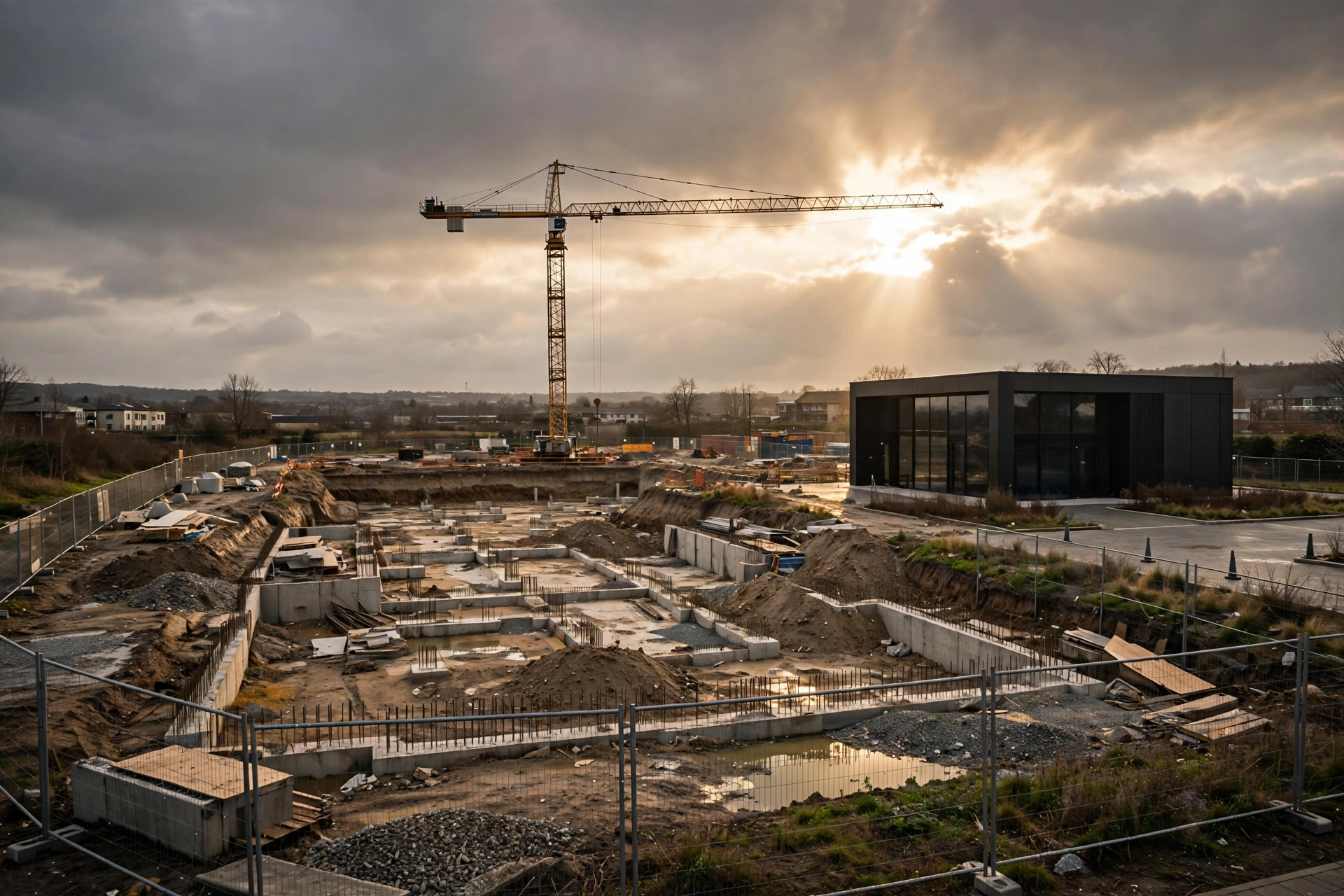
There was a flicker of improvement in the second quarter of 2026. GTHA new condo sales rose 52% year-over-year to 702 units, the first annual gain since Q3 2023. Ontario's enhanced HST rebate and a surge in bulk investor purchases pulled the market off its 35-year floor. But the recovery was thin: sales remained 86% below the 10-year average for second-quarter periods, and nearly all the activity came from completed, developer-held units — sales of those more than tripled to 535 units, driven in part by large bulk transactions with investment groups. Pre-construction sales moved in the opposite direction, tumbling 80% annually to just 50 units. The cranes visible on Toronto's skyline today are finishing projects sold five or six years ago. Behind them, the pipeline is nearly empty.
How We Got Here: The Investor-Driven Model Breaks Down
The pre-construction condo was the engine of Toronto housing supply for three decades. Developers financed towers by selling units years before construction, transferring much of the risk to buyers in exchange for prices that were historically lower than resale. The Bank of Canada has explained the mechanics of this model: banks generally require roughly 70% of a project's units to be presold before they issue construction loans. The industry therefore courted investors, who were attracted to the leverage — roughly 20% down — and the prospect of flipping units before completion to avoid arranging full financing.
That leverage worked in reverse when conditions changed. Record-low interest rates between 2020 and 2022 unleashed a surge of pre-construction purchases, largely by investors banking on rents covering their carrying costs. When the Bank of Canada launched its historic rate-hiking campaign, the economics of those investor units deteriorated sharply. Rent growth, which had briefly soared after the pandemic, moderated as completed supply poured onto the rental market. The Bank of Canada itself has stated that "Toronto's condos are no longer providing substantial returns for short-term investors," citing rising rates and slowing population growth — an environment, it said, that is "challenging the business model of condo builders."
The investor cohort that fuelled the market in the era of record-low rates is now almost completely absent, Toronto mortgage broker Micky Khaneka told Canadian Mortgage Professional. According to Urbanation's Q4 2025 data, for condo units completing in 2025, ownership costs exceeded realized rents by more than $1,300 per month on average. Resale prices in comparable buildings have dropped roughly 25% from their 2022 peak. Many investors are selling at a loss, holding at negative cash flow, or walking away — and some are flooding assignment-sale platforms, listing their pre-construction contracts at or below the original purchase prices.
The buyers who purchased pre-construction units in recent years only to see appraisals come in far below the agreed sale price have added to the freeze. Affordability remains a concern even in a much cooler market, Khaneka said, because the buyers locked in at peak-era prices are still in limbo: unless banks provide blanket appraisals, it is very challenging for them to get appraisals on their units, and many face a liquidity crunch that leaves them few options without equity or disposable income to cover the shortfalls.
The 70% Rule and the Coming Supply Cliff
The 70%-presold financing threshold is the mechanism that converts weak sales into missing supply. A project that cannot reach it cannot be built. When presales fall below the threshold, sales figures can effectively fall "below zero": buildings that appeared sold can be cancelled or converted to rental, erasing their units from the future condo pipeline entirely.
That is exactly what happened in 2025. A record 28 active condo projects — totalling 7,243 units — were cancelled, more than double the units cancelled in 2024 and well above the previous record set in 2018. Eight of those cancelled projects, representing 2,189 units, were converted to purpose-built rental, following a similar shift involving 1,434 units in 2024.
The starts data confirms the pipeline is draining. Purpose-built rental starts increased 24% year-over-year to 8,545 units in 2025 — a multi-decade high — while condo starts fell 63% to just 3,272 units, a multi-decade low. Zoom out further: condo starts have dropped 88% over the past three years, leaving a 10-year low of total inventory under construction at 50,479 units. Toronto saw zero new condo launches in the first half of 2026, a first on record.
Because high-rise towers take three to five years — sometimes more — to go from launch to occupancy, the slowdown happening now locks in a severe shortage of new completions later this decade. Market observers' forward estimates illustrate the cliff: roughly 29,000–31,000 completions in 2025 (the peak), about 22,000 in 2026, 14,000–18,000 in 2027, 10,000–13,000 in 2028, and 8,000–10,000 in 2029. Hildebrand has warned that with virtually no new units being added to the pipeline, condo supply is set to see its largest-ever decline, and he has said that by the end of the decade the region may not see any new condo completions at all.
The Great Pivot: Purpose-Built Rental Takes Over
The most striking feature of this cycle is that construction has not stopped — it has changed species. Nationally, purpose-built rental now represents more than 60% of all new housing construction. Developers who cancelled presale projects have been redesigning the towers as rental buildings; since the start of 2024, more than 11,000 pre-construction condo units in the region have been cancelled, with many converted to purpose-built rental rather than abandoned.
One reason the rental wave has limits: the Bank of Canada has noted that there may be an oversupply of units in the condo market, but many of them are simply too small for end users to view as a viable place to live. The investor-driven era produced a generation of sub-600-square-foot units designed for investors, not tenants. Purpose-built rental is, at least, being designed as rental from the ground up.
Tariffs are adding a new pressure to this pipeline. Statistics Canada's Building Construction Price Index shows structural steel framing costs up 7.2% since Q1 2025, attributed directly to retaliatory tariffs, while domestically produced materials such as wood and composites have seen little to no impact. Because high-rise construction — dominant in Toronto and Vancouver — is the most steel-intensive, Toronto and Vancouver are the most exposed markets. A Rentals.ca and Urbanation analysis warns that starts deferred in 2026 could become missing completions in 2030–31, just as population growth is expected to recover — setting up a collision between a supply trough and a demand rebound.
The HST Rebate Lifeline — and Its Limits
Governments have not stood by. Ontario's enhanced harmonized sales tax (HST) rebate, confirmed by the provincial and federal governments in March 2026, offers a maximum rebate of $130,000 on new homes valued up to $1 million, proposed for purchases from April 1, 2026 to March 31, 2027. Federal legislation delivering the full benefit received royal assent on June 18, 2026. Urbanation estimated the rebate could cut prices on unsold new condos by roughly $100,000 on average and narrow the new-versus-resale price gap to about 20%.
It worked — partially. The Q2 2026 sales uptick was credited to the rebate and bulk investor buying. But the benefit has largely flowed to completed, developer-held inventory. Pre-construction purchases qualify only if construction begins before March 31, 2027 and reaches substantial completion by December 31, 2029, a timeline that creates real qualification risk for early-stage buyers. That is why pre-construction sales kept falling even as completed-unit sales tripled: buyers will not risk an HST rebate they might not qualify for on a project that might not finish on time.
What 2028–2030 Actually Looks Like
Put the pieces together and the shape of the rest of the decade comes into focus. In the near term — 2026 and 2027 — buyers and renters still face an oversupply hangover. Urbanation reported a record 4,295 completed but unsold units as of Q1 2026, more than double the level a year earlier and nearly five times that of two years ago. Based on the sales pace of the preceding 12 months, that represented 92 months of completed new condo supply. Another 8,629 unsold new condos were under construction and set for completion in the next few years. Developers have cut asking prices on standing inventory to an average of $1,189 per square foot in Q1 2026 — down 5% year over year and 13% from the peak three years earlier — while comparable resale units averaged $859 psf, a 25% slide from Q1 2022. The record 38% gap between new and resale prices narrowed only modestly in Q2 (new units at $1,186 psf carried a 43% premium over the $830 psf resale average in recently registered buildings).
Then the wave passes. From roughly 2028 onward, the units completing today — sold in 2020 and 2021 — will have washed through the market, and there will be very little behind them. Completions are forecast to fall to 10,000 or fewer per year by 2028–2029, against a city that keeps adding people. Population growth has slowed, but the federal government continues to target more than 400,000 new permanent residents annually, and household formation continues to outpace new supply across most major urban centres. The rental market has already absorbed the demand that left the ownership market.
The irony of this cycle is that it is happening alongside Canada's worst housing affordability crisis in decades. The slowdown in new starts is, in one sense, the market doing something healthy: clearing excess inventory and resetting the price signals developers need to underwrite new projects responsibly. But the lag structure of high-rise construction means today's correction guarantees a future shortage — one that analysts describe as the largest drop in condo completions the city has ever seen, arriving in 2028–2030, just as population growth is expected to return.
What This Means for Buyers
Buyers in 2026 are in a position they have not held in a generation. Negotiating power is real: standing inventory is at record levels, developers are cutting prices to or below cost to move units, and the new-versus-resale gap means resale condos — particularly the larger units families actually need — are available at 2021 or earlier prices in some submarkets.
But the strategic lens is the pipeline. The pre-construction market is dormant, but the projects that do exist carry risks that buyers must weigh carefully: the HST rebate's qualification timeline, the possibility that a project converts to rental, and the chance — illustrated by the One Bloor West case, where the monitor is seeking court approval to cancel hundreds of presale agreements — that a developer in distress may unwind the very contracts buyers are counting on. For now, resale offers the better value equation; pre-construction demands the better due diligence.
What This Means for Sellers and Investors
If you are selling today, the environment is unforgiving. Buyers are price-sensitive, competition is real, and strategy matters more than ever. Understand that you are selling at the bottom of a supply cycle — that does not mean you should not sell, but it means precision is everything: pricing aligned with today's market, positioning your unit against competing inventory, and targeting the investor buyers who understand the cycle, because sophisticated buyers are already stepping in.
For investors, the math is starting to work again for the first time in years. With prices down roughly a quarter from peak and rents having absorbed much of the correction, Toronto condos are close to cash-flow neutral or slightly positive in some cases. The opportunity window is defined by the supply cliff: buying into today's soft market means positioning ahead of the next cycle, when completions collapse and the rental market tightens. The investors who bought at 2021–2022 prices face a harder reality — negative cash flow, appraisal shortfalls, and in some cases, the prospect of defaulting on presale contracts.
The Bottom Line
The pre-construction condo market has hit its lowest point in 35 years, and the causes are structural, not cyclical. A financing model built on presales and investor leverage worked brilliantly when rates were near zero and prices always rose; it broke when both reversed. The cranes in the sky are finishing the past. Almost nothing is being started for the future.
The next four years will therefore play out in two acts. Act one, now through roughly 2027: a buyer's market, with record completed inventory, falling prices, and developers cutting deals to clear their books. Act two, 2028–2030: a supply cliff, with completions falling to a fraction of historic norms, just as demand fundamentals recover. The investor who financed Toronto's towers for three decades has left the building. What replaces that model — purpose-built rental, new forms of financing, or a restructured pre-construction market with prices that actually clear — will decide how deep act two gets.
For anyone thinking about a condo purchase in the GTHA, the lesson of this cycle is the same one the Bank of Canada flagged: buy the home you can afford to live in, at a price the rental market can support, and treat the building boom of the 2020s as what it was — a financing arrangement, not a guarantee.
Sources: Urbanation Inc. Q2-2026 and year-end 2025 Condominium Market Surveys; Urbanation president Shaun Hildebrand; Canadian Mortgage Professional (mpamag.com); REMI Network; Storeys; Rentals.ca and Urbanation tariff analysis; Statistics Canada Building Construction Price Index; Bank of Canada housing market analysis via Better Dwelling; Canadian Trends.




Comments
No comments yet. Be the first to share your thoughts.